How to Track Koshari, Ful and Egyptian Meals
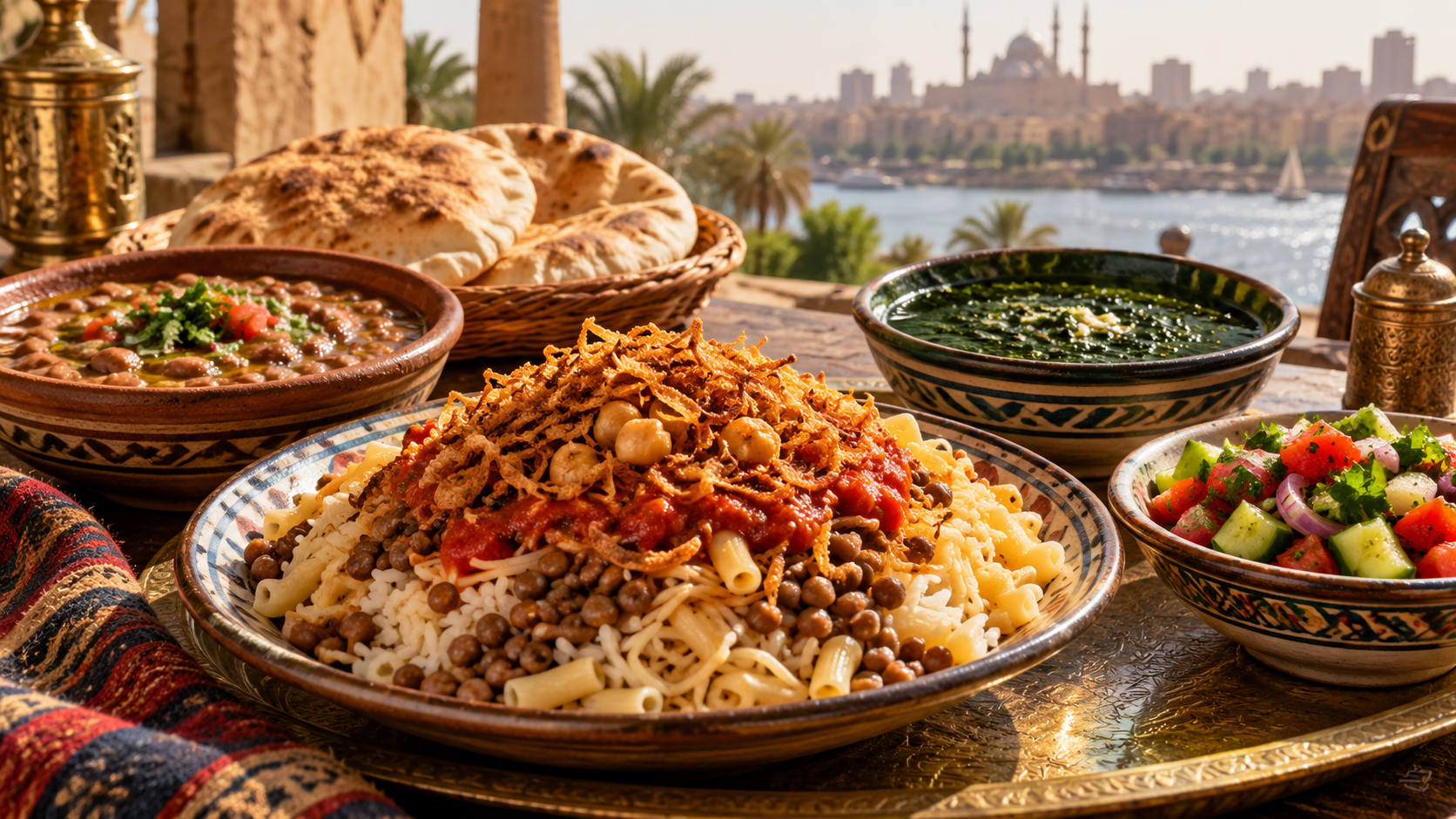
Koshari, ful and molokhia combine grains, legumes, sauces and toppings. Separate those parts so your record reflects your own bowl or plate rather than an assumed standard recipe.
This is a practical tracking guide, not medical advice. Restaurant recipes and home portions vary, so do not treat a photo estimate or a database entry as an exact measurement.
Egyptian meals worth logging as parts
The base, fried topping and sides each affect the portion.
- Koshari: record rice, pasta, lentils, chickpeas, tomato sauce and crispy onions as separate parts.
- Ful medames: record beans, oil, egg, bread and any tahini or toppings.
- Molokhia meal: record the greens, rice or bread, protein and added ghee or oil.
A practical way to track the meal
- Start with the rice, pasta, bread or bowl size.
- Add beans or lentils, protein and egg.
- Include fried onions, oil, tahini and sauces.
- Record the sides that are eaten with the main bowl.
Use the local food database when you need a number
FAO/INFOODS lists African food-composition resources that can help with ingredient lookup. Use the closest preparation and portion, while recognising that a home or street-food recipe is not one exact standard.
Where Calorie Coach Me fits
Calorie Coach Me can make a first, approximate estimate from a meal photo. Review the dish name, ingredients and portion before you save it—especially oil, broth, sauces and rice. Try a free meal preview on the web or use the Android app to keep a meal log.
FAQ
Is koshari only one item to log?
No. Its rice, pasta, lentils, chickpeas, sauce and fried onions are useful separate parts.
Should I include bread with ful?
Yes. The bread and added oil are part of the meal portion.
Try it
Get the Android app Pruébalo gratis en la web
Sources
The linked source is a country-specific food-composition resource. It supports ingredient and prepared-food lookup; it does not turn a variable home or restaurant recipe into one exact number.
Last reviewed: 24 de octubre de 2026