How to Track Chicken Adobo, Sinigang and Filipino Rice Meals
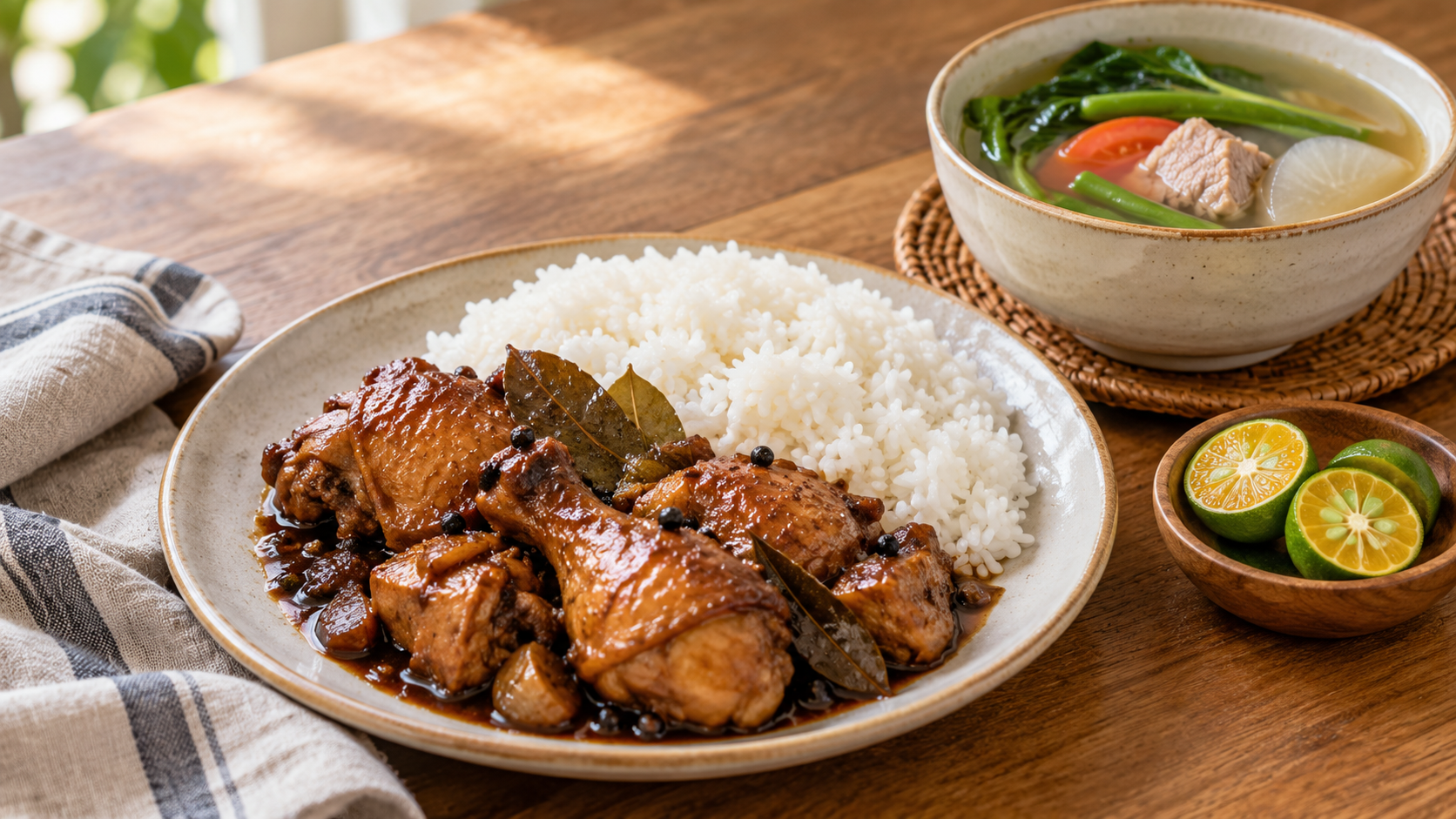
Chicken adobo, sinigang and rice are everyday meals, but the sauce, cut of meat and serving spoon can change the total more than the dish name does. Start with the parts you can see and make the hidden extras explicit.
This is a practical tracking guide, not medical advice. Restaurant recipes and home portions vary, so do not treat a photo estimate or a database entry as an exact measurement.
Filipino meals worth logging as parts
These dishes are not one fixed recipe. The useful habit is to record the base, protein, sauce and extras separately.
- Chicken or pork adobo: note the cut, skin, cooking oil and how much reduced sauce is on your serving.
- Sinigang: log the rice, meat or fish and starchy vegetables; broth alone is not the full meal.
- Rice meals: count the rice scoop first, then the ulam, egg, fried garnish and drink.
A practical way to track the meal
- Start with the rice: use a bowl, cup or serving-spoon reference you can repeat.
- Name the protein and cooking style: chicken thigh with skin is different from lean chicken breast.
- Add oil, coconut milk, fried garlic, egg and sweet drinks separately when they are present.
- When a shared dish is served family-style, estimate your own spoonfuls—not the whole pot.
Use the local food database when you need a number
The Philippine Food Composition Tables from DOST-FNRI are the appropriate local starting point for checking ingredients and prepared foods. Match the entry to the cooking method and portion; if the recipe differs, record the difference rather than forcing a false exact value.
Where Calorie Coach Me fits
Calorie Coach Me can make a first, approximate estimate from a meal photo. Review the dish name, ingredients and portion before you save it—especially oil, broth, sauces and rice. Try a free meal preview on the web or use the Android app to keep a meal log.
FAQ
Should I log adobo as one item?
Use the dish name as a useful note, but separately recording rice, meat, skin and sauce gives you a more honest estimate.
Does sinigang broth make the meal low calorie?
Not necessarily. The broth can be light, while the rice, protein, oil and starchy vegetables determine most of the meal.
Try it
Get the Android app Jaribu bila malipo kwenye wavuti
Sources
The linked source is a country-specific food-composition resource. It supports ingredient and prepared-food lookup; it does not turn a variable home or restaurant recipe into one exact number.
Last reviewed: 24 Oktoba 2026