How to Track Waakye, Banku and Ghanaian Meals
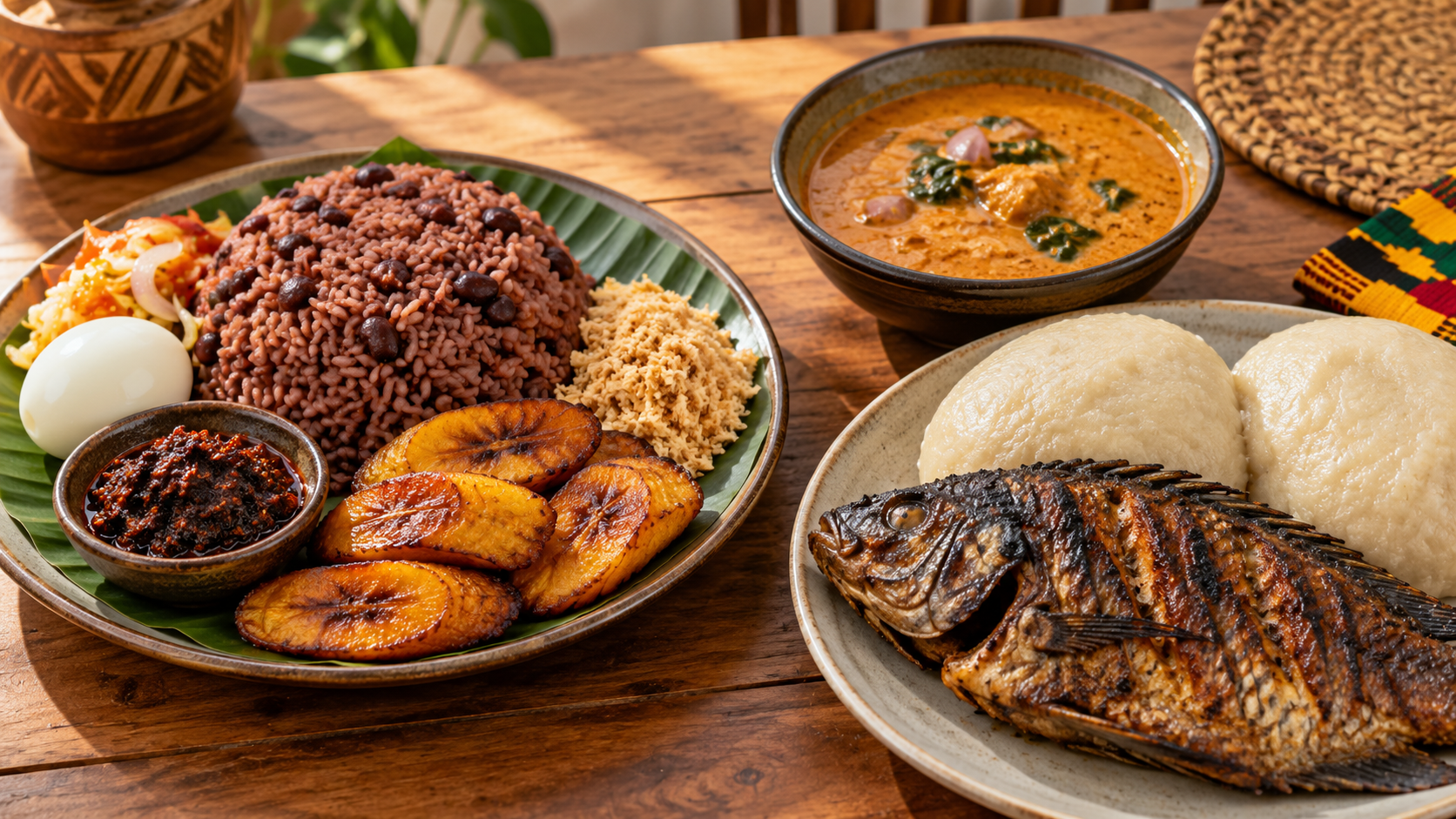
Waakye and banku meals can combine starch, beans, fish or meat, oil and sauces in one plate. Record the parts you eat rather than assigning every serving one fixed number.
This is a practical tracking guide, not medical advice. Restaurant recipes and home portions vary, so do not treat a photo estimate or a database entry as an exact measurement.
Ghanaian meals worth logging as parts
Your portion and the extras on the plate are more useful than the dish name alone.
- Waakye: record the rice and beans, egg, fish or meat, plantain, shito and any spaghetti separately.
- Banku with tilapia: record your banku portion, grilled fish, pepper sauce and any added oil.
- Groundnut soup: record the soup, protein and your fufu or rice ball portion as separate parts.
A practical way to track the meal
- Start with the rice, banku, fufu or rice-ball portion on your own plate.
- Add egg, fish or meat, including frying oil or skin where relevant.
- Record shito, soup and fried plantain rather than leaving sauces and sides out.
- For shared dishes, estimate your own spoonfuls or pieces—not the whole pot.
Use the local food database when you need a number
The FAO/INFOODS West African food-composition table is a useful regional starting point for Ghanaian ingredients. Match the food, cooking method and portion; restaurant and home recipes still vary.
Where Calorie Coach Me fits
Calorie Coach Me can make a first, approximate estimate from a meal photo. Review the dish name, ingredients and portion before you save it—especially oil, broth, sauces and rice. Try a free meal preview on the web or use the Android app to keep a meal log.
FAQ
Is waakye one fixed serving?
No. The rice-and-bean portion, protein, plantain, sauces and oil can all change the meal.
Should I count shito and groundnut soup?
Yes. Sauces and soups can contain ingredients and oil that a meal photo does not make clear.
Try it
Sources
The linked source is a country-specific food-composition resource. It supports ingredient and prepared-food lookup; it does not turn a variable home or restaurant recipe into one exact number.
Last reviewed: 2026年10月24日