How to Track Ramen, Sushi and Japanese Curry Rice
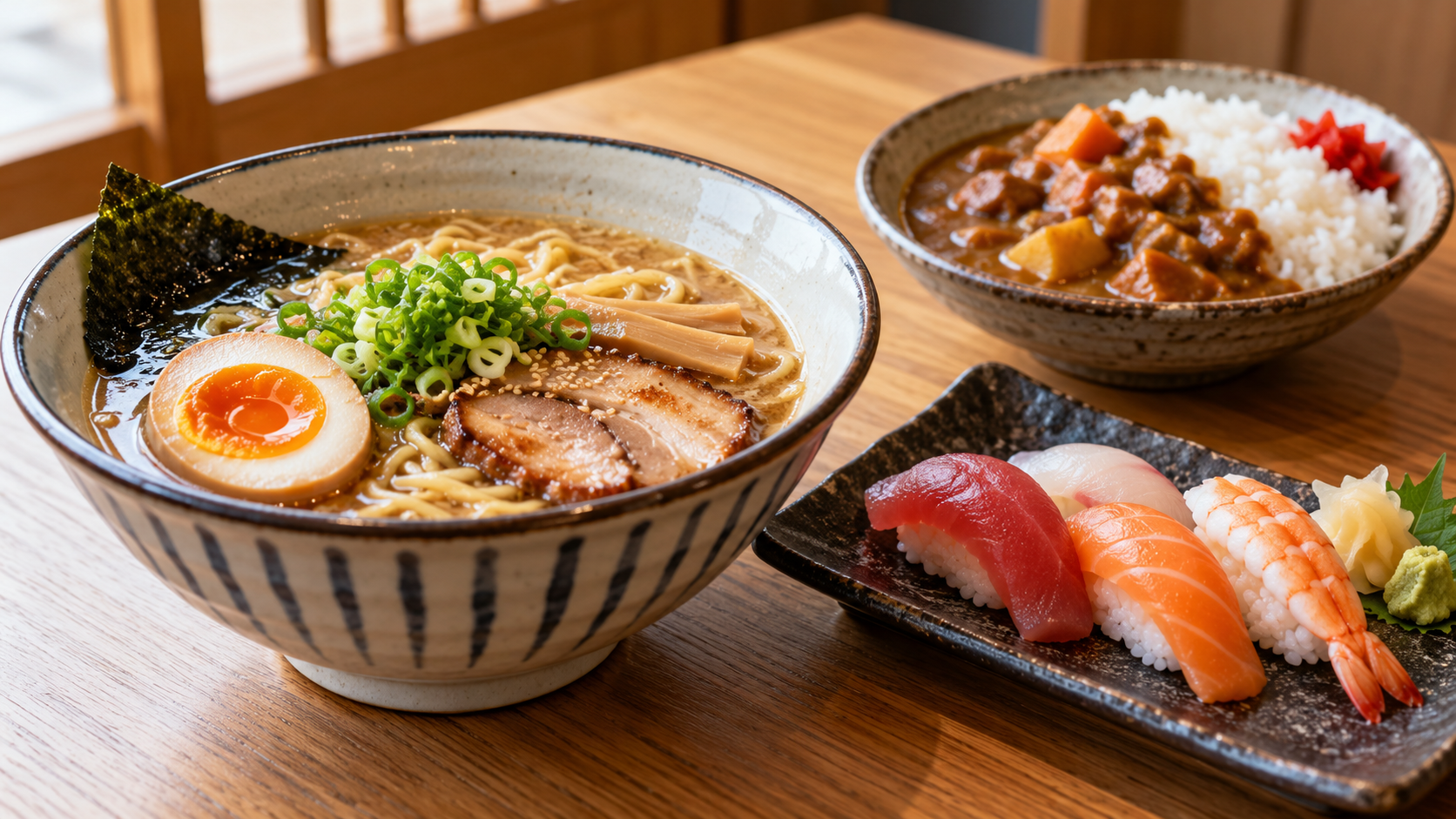
Ramen, sushi and curry rice can look familiar on a photo while broth richness, noodle amount, rice size and toppings make each serving very different.
This is a practical tracking guide, not medical advice. Restaurant recipes and home portions vary, so do not treat a photo estimate or a database entry as an exact measurement.
Japanese meals worth logging as parts
The dish name is only the start. The portion and toppings make the estimate useful.
- Ramen: note noodle amount, broth style, pork, egg, oil and whether you drink most of the soup.
- Sushi: count pieces and identify nigiri, maki, mayonnaise, fried fillings and sweet sauces.
- Japanese curry rice: record the rice separately from the curry, protein, breaded cutlet and pickles.
A practical way to track the meal
- Count pieces, bowls or half-bowls before taking a photo.
- Record rich toppings: chashu, egg, mayonnaise, tempura and cheese matter.
- For curry or donburi, estimate the rice separately from the sauce and topping.
- Use the same bowl or takeaway size as your own reference next time.
Use the local food database when you need a number
Japan’s Standard Tables of Food Composition publish standard values per 100 g and can be reused with attribution. They are a better source than a generic overseas listing, but restaurant recipes still vary.
Where Calorie Coach Me fits
Calorie Coach Me can make a first, approximate estimate from a meal photo. Review the dish name, ingredients and portion before you save it—especially oil, broth, sauces and rice. Try a free meal preview on the web or use the Android app to keep a meal log.
FAQ
Is ramen one fixed calorie number?
No. Noodle weight, broth, oil and toppings vary enough that a single number can mislead.
Does sushi always mean a light meal?
Not automatically. Piece count, rice, mayo, fried fillings and sides can change the meal substantially.
Try it
Get the Android app Coba gratis di web
Sources
The linked source is a country-specific food-composition resource. It supports ingredient and prepared-food lookup; it does not turn a variable home or restaurant recipe into one exact number.
Last reviewed: 24 Oktober 2026