How to Track Injera, Wat and Ethiopian Meals
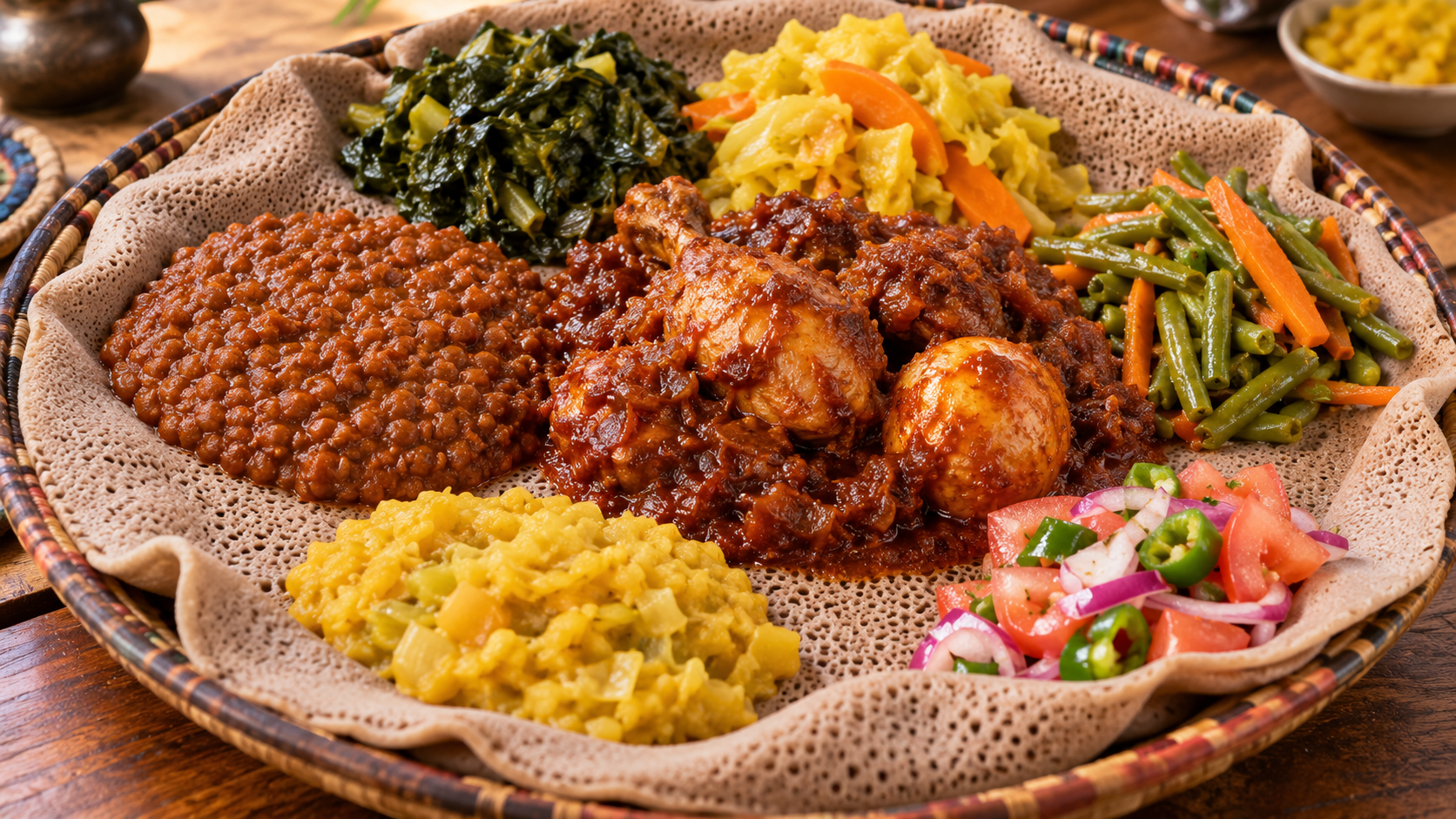
A shared injera platter can contain several wats and vegetables. Record the injera you eat and each serving that reaches you, rather than assigning the whole platter to one person.
This is a practical tracking guide, not medical advice. Restaurant recipes and home portions vary, so do not treat a photo estimate or a database entry as an exact measurement.
Ethiopian meals worth logging as parts
Shared platters are easier to record once the bread and each topping are separated.
- Injera with lentil wat: note how much injera you eat, the lentil serving and any oil-rich sauce.
- Doro wat: record chicken, egg, sauce and injera as separate parts.
- Shiro and vegetable sides: record the serving size and added oil or butter when used.
A practical way to track the meal
- Estimate injera by the piece or fraction of the shared round.
- Record each wat or vegetable serving separately.
- Add chicken, egg, legumes and visible cooking fat.
- Use your own plate or section of the platter as the portion reference.
Use the local food database when you need a number
FAO/INFOODS lists African food-composition resources and regional data centres. Confirm the closest local entry and cooking method before assigning a numeric estimate; shared recipes and portions still vary.
Where Calorie Coach Me fits
Calorie Coach Me can make a first, approximate estimate from a meal photo. Review the dish name, ingredients and portion before you save it—especially oil, broth, sauces and rice. Try a free meal preview on the web or use the Android app to keep a meal log.
FAQ
Is a shared injera platter one serving?
No. Record the injera and toppings that you personally ate.
Does lentil wat have one fixed value?
No. Lentil amount, oil, portion and the injera eaten with it all matter.
Try it
Get the Android app 웹에서 무료로 체험
Sources
The linked source is a country-specific food-composition resource. It supports ingredient and prepared-food lookup; it does not turn a variable home or restaurant recipe into one exact number.
Last reviewed: 2026년 10월 24일